
Journalism Collaborative Fills Opportunity Gap and News Gap
Aspiring young journalists are getting published and connected to opportunities through the Connecticut Student Journalism Collaborative.
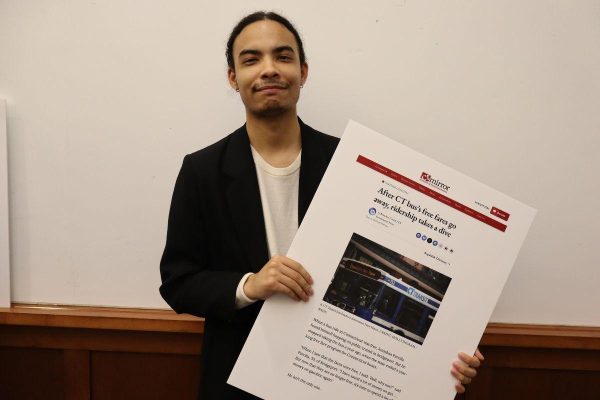
Brandon Cortés was in his data journalism class at Southern Connecticut State University when he uncovered a story about bus ridership rates in Connecticut. After some time mining Federal Transit Administration data, he wrote his article titled, “After CT bus’s free fares go away, ridership takes a dive.”
Within weeks, the story was featured in the Connecticut Public and the Connecticut Mirror. The journalism major’s reporting reached a statewide audience because of his participation in the Connecticut Student Journalism Collaborative, where he received both guidance and a stipend for his work.
The nonprofit launched in 2024 to connect aspiring journalists at Connecticut colleges and universities with local and national media outlets, and to help fill the void of paid, undergraduate-level internships in the journalism industry. And in the process, it is also generating much needed local news coverage.
“It used to be that journalism was seen as a very competitive field, but I think it's changing a lot,” said Harriet Jones, Collaborative editor and project manager. Where a story might have meant a valuable “scoop” over your competitor in the past, the way forward today is to collaborate, she said.
This is in part due to the winnowing of local journalism outlets’ coverage and circulation. In Connecticut, 46% of local newspapers shuttered between 2004 and 2019.
“With our model, we serve the community by going out and finding stories that people really need to have covered,” said Jones.
Through monthly meetings with partners at news outlets in the state, the Collaborative identifies coverage niches and needs. Last year, 41 of the 43 student-reported stories published to CT Community News were picked up a total of 79 times across eight statewide media outlets.
“I was astonished. I didn’t think at the time that it would get published,” said Cortés. “I tend to have imposter syndrome, but it really opened my eyes to the impact of what good journalism can be. It’s because public transportation is an everyday issue for a lot of people.”
With support from a grant at The Community Foundation for Greater New Haven in 2024, the Collaborative provided stipends for 21 participating SCSU students. Of the students who received stipends, 80% were Pell Grant recipients, and 60% were from the first generation in their family to attend college.
“We always say that you should get paid for the work that you're doing, and so it's really awesome for us to be able to do that,” said Jodie Gil, associate professor of journalism at SCSU and a mentor in the Collaborative.
“These are students who don’t always have the financial support or mentoring to be able to participate in a program that requires involvement beyond their classroom experience,” said Jones. “Being able to provide professional exposure and connections through this grant-funded program should greatly help them launch successful careers in journalism as they graduate.”
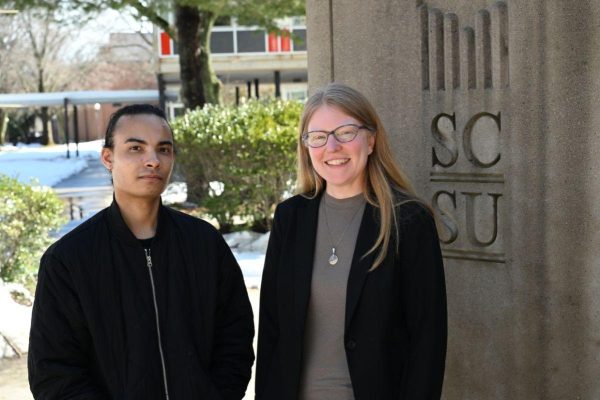
The grant supported two networking events in 2025, as well as transportation to a statewide media appearance that featured the nonprofit and participating students. These efforts helped the Collaborative broaden its reach, said Jones, and deepen relationships with other area colleges and universities.
“Our intent is to expand our reach in the New Haven area,” Jones said. ”We're open to anyone with a writing program who wants to participate.”
Cortés said he sees a need for engaged local coverage, and instead, too many stories that are geared towards virality, controversy and what’s “trending.” You often see stories about people, but not as often for people, he said.
When it comes to his imposter syndrome, Cortés has since been heartened by the experience of seeing his work published in reputable news outlets.
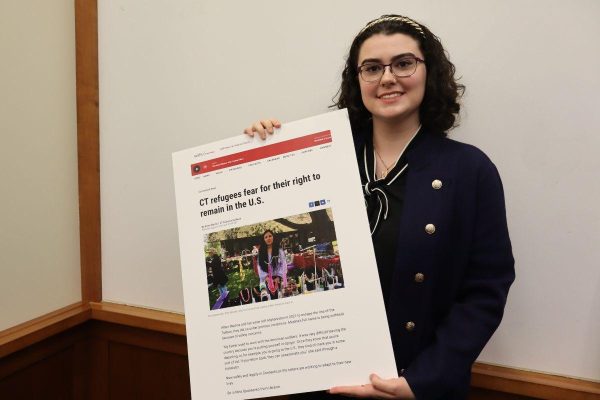
Avery Martin, a SCSU senior and journalism major, agrees. Her story, focused on refugees in Connecticut during the ongoing immigration crackdown, was picked up by WSHU Public Radio.
“To have a way to get my work out there has been huge for me and it's definitely something that I plan on using in the future to show I've already done professional work. It's not just the work we do at school; it's a different thing to be able to say like we’ve been published off campus, locally and nationally,” said Martin. “That’s a huge thing for me. My confidence as a writer has definitely gone up massively.”
Cortés said his article led to an internship opportunity, and Martin said a journalism professor who read her article encouraged her to apply to a graduate program to pursue her master’s, which she plans to do.
“I don’t have connections in the journalism world. That wouldn’t have happened if I hadn’t been able to get my work out there,” said Martin.
Find this story and others in our 2025/26 Report to Our Community


