
“Remember, Reclaim, Rise across Connecticut”
100+ gather to celebrate Black Philanthropy Month.
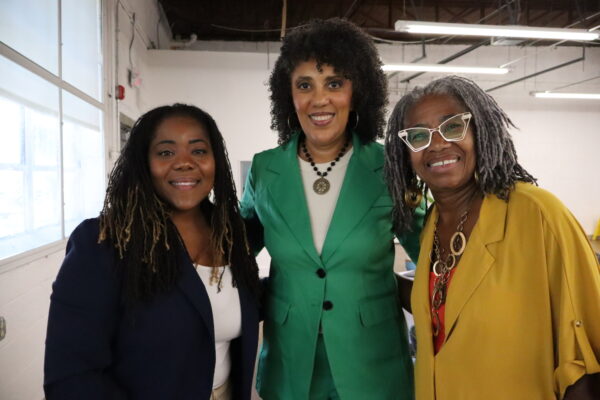
“We've forgotten the village, the neighborhood, the community… the each-one-teaches-one mentality, the collage of hand games and handshakes, stories of old retold,” lilted Manchester Poet Laureate Nadia Sims to a rapt crowd.
Her spoken word poem titled “Remember, Reclaim, Rise across Connecticut” kicked off an event by the same name for Black Philanthropy Month (BPM), a global celebration elevating African descent giving and funding. The virtual discussion was moderated by Dr. Leon Bailey, SVP for Human Resources and Organizational Culture at The Community Foundation, and was co-hosted alongside the Connecticut Community Foundation, Fairfield County’s Community Foundation, the Hartford Foundation for Public Giving and the Prosperity Foundation.
“Sankofa,” the organizing theme of BPM 2025, comes from the Akan people of Ghana and, in rough translation, means “go back and get it,” pointing to the importance of remembering the past in planning for the future. As panelist and Waterbury Bridge to Success Director Althea Marshall Brooks put it, “Sankofa” is about “bringing it back to bring it forward.”
Brooks joined fellow panelist Julienne Foy in touching on the importance of giving circles; Foy runs The SOUL Fund in Fairfield County, while Brooks helped launch the Waterbury Black Giving Circle three years ago. Brooks said the Waterbury Black Giving Circle is “a group of changemakers in a variety of positions and roles throughout the city, who are really seeking to catalyze and sustain a movement toward greater economic opportunity for the Black community in the city of Waterbury.”
These collectives are just one example of a longstanding tradition of “comradery, leaning into each other and supporting each other when times were difficult” within the African American community, Foy said, and are an analogue to the “collective of aunties” she grew up with in New Haven. “Doors were not closed; doors were always open.”
In this way, Foy observed, Black giving circles were happening informally “long before it was given a title and a name. And I appreciate the fact that we are continuing that movement and bringing it forward.”
Rodneyna M. O. Hart, Deputy Director of Programs & Exhibitions at the Amistad Center for Art and Culture, observed, “It’s important in thinking about the future that we understand that philanthropy, yes, can be financial, but we're also talking about the connection between philanthropy and cultural preservation. By funding and supporting black arts, history, heritage and culture, it ensures that these stories, these things remain in our future.”
Together, the group led an empowering conversation celebrating the richness of African American culture—past, present and future. While the online conversation took place, The Community Foundation co-hosted an in-person watch party and luncheon at the African American Lodge #24 in Hamden. Read more takeaways here.


