Preserving the Land and Local History
The Branford Land Trust has preserved hundreds of acres of natural space. Now, they are preserving their headquarters in two century-old structures.
Since 1967, the Branford Land Trust (BLT) has grown to protect over 950 acres of natural space in the town and more than 400 acres through conservation easements that limit development rights.
Local land trusts operate in more than 90% of U.S. counties according to the national Land Trust Alliance, and collectively protect over 61 million acres of land with natural, recreational, scenic, historical or agricultural significance.
The mission of the Branford Land Trust is to “preserve open space in Branford, and to promote our community’s appreciation of Branford’s diverse natural features.”
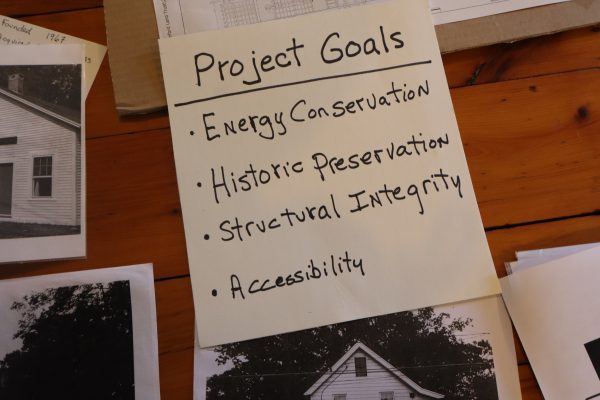
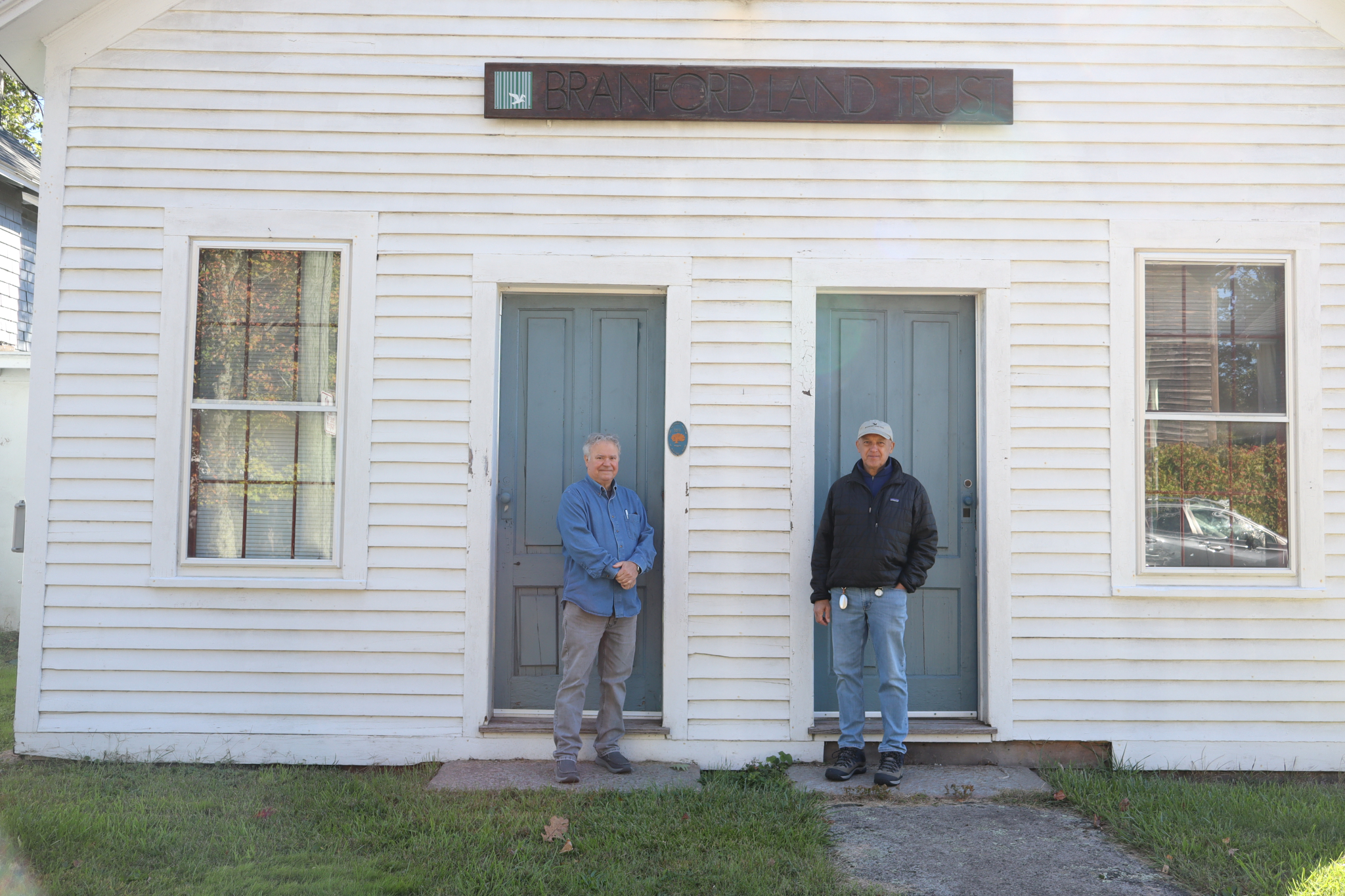
With support from The Community Foundation for Greater New Haven, the organization has started to fully restore the historic Land Trust House on School Street, “Where Land Conservation Meets Historic Preservation.”
“This special space has historically been used as a schoolhouse, a firehouse, a polling station, and now as the headquarters for the all-volunteer Branford Land Trust,” explained BLT Board President Julie Wagner.
Acquired in 1983 as a donation from the Town of Branford, the building has served as a meeting and office space, as well as providing storage for equipment, supplies, maps and archives.
A multi-year grant beginning in 2023 supported a complicated septic system overhaul for the property’s two connecting structures, one built in 1865, the other in 1901 and with an expansion during the 1950s.
The all-volunteer organization moved slowly through the restoration, held up by unforeseen fixes for the 19th-century structure, including structural issues and asbestos, all of which has been remediated.
“The upgrades ensure that we preserve the structure for another 150 years,” said Bill Chapin, board member and head of the building committee.
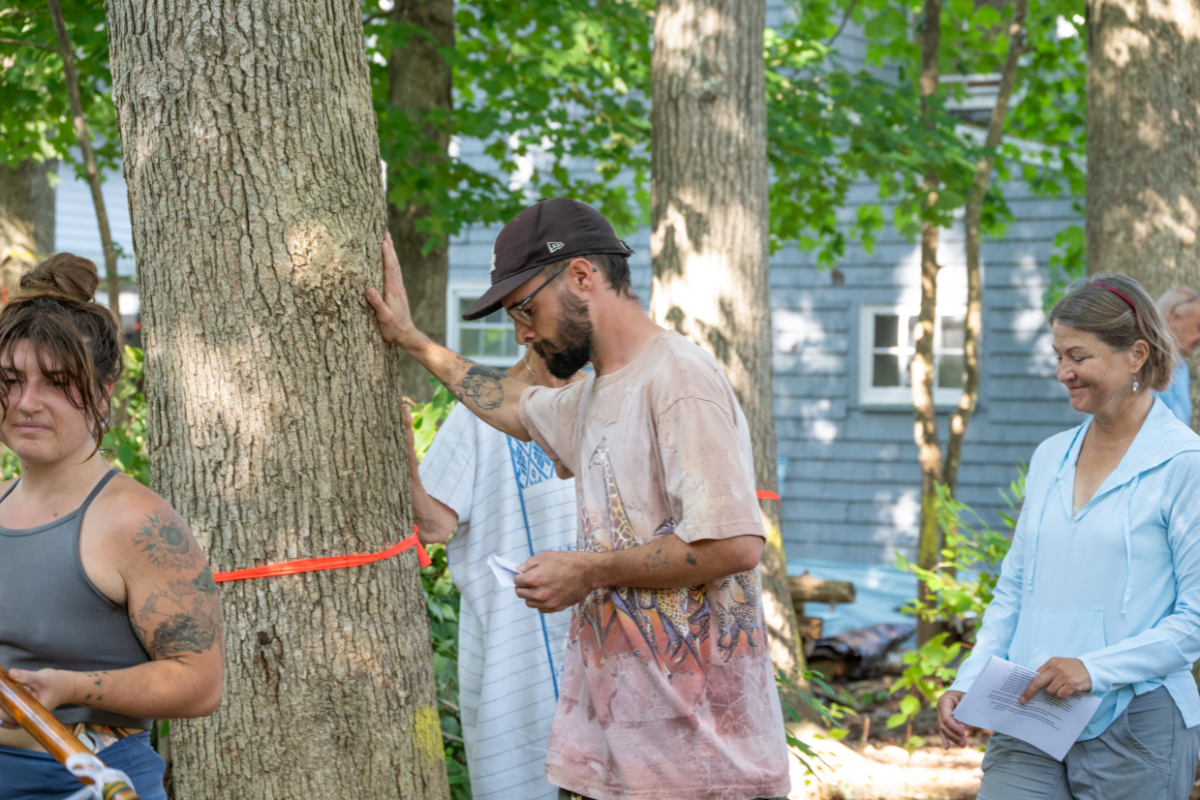
Before the renovation could begin, several trees had to be removed. Rabbi Rayzl Feuer and volunteers gathered for poetry and prayer to honor the trees, which were milled by a local sawyer in the hopes of being repurposed by a local artist or woodworker.
“With the new, modern septic system in place, our board, committees and work crews will be able to more comfortably meet and conduct business,” said Wagner. She hopes this will make for more community events, trainings for volunteers and students, as well as set days the building remains open to the public.
“This infrastructure repair and upgrade makes our conservation work possible and that work benefits the whole town,” said Wagner. “It also helps us set an example of good environmental and cultural stewardship.”