
Heritage Music Fund
Est. 2025 by Dr. Jonathan Berryman
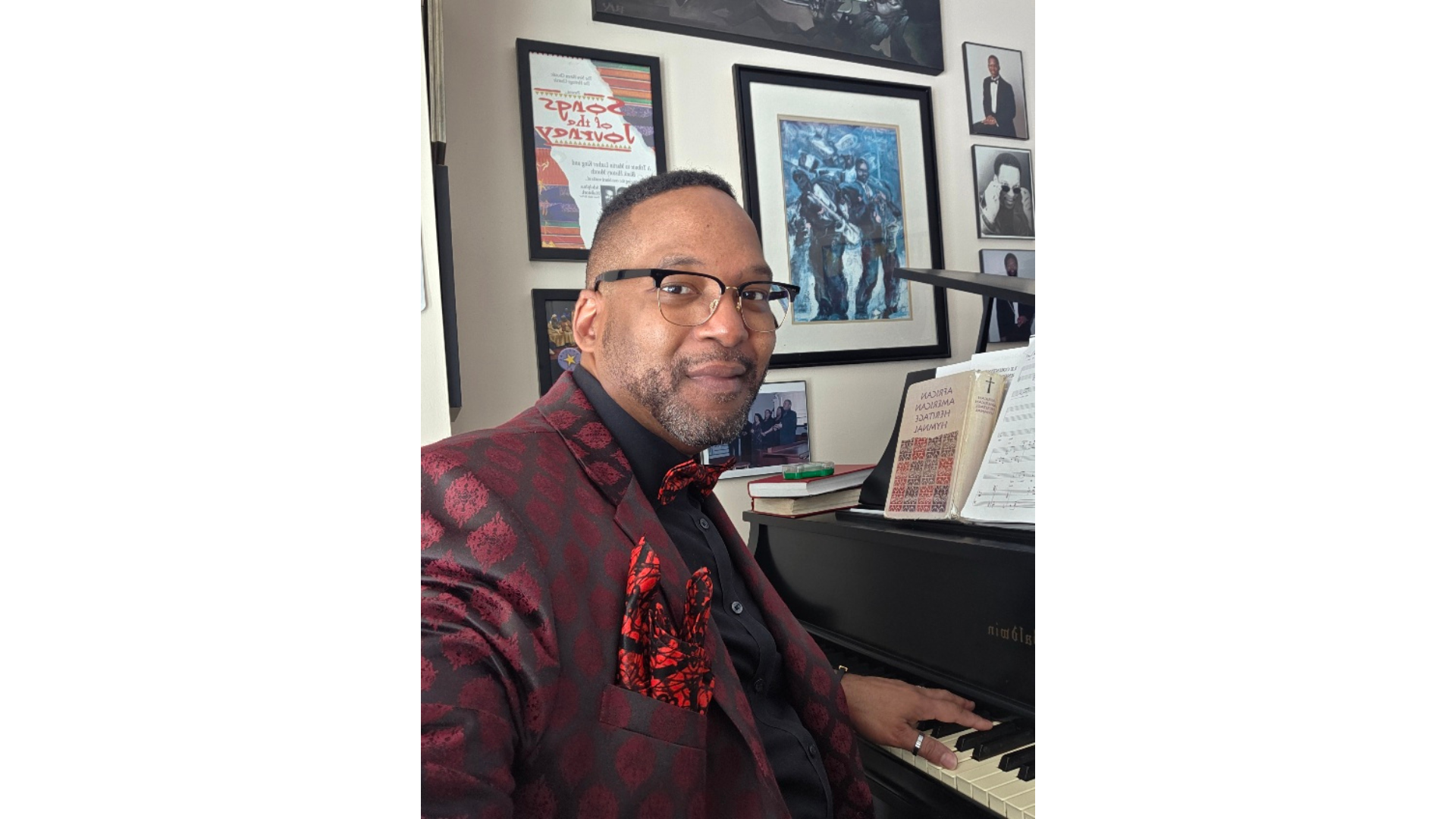
For more than three decades, Dr. Jonathan Q. Berryman has influenced the New Haven arts scene as a musician, educator, and sacred music scholar. As a choir teacher and choral conductor, he has worked with every age group, from 3 year olds to centenarians, helping them discover and embrace the joy of communal singing, especially in choirs.
“Part of my journey at this point is finding out what it means to rebuild the choir. I want more people to experience African American choral music in the fullness that we used to know it,” Berryman says.
Berryman’s mission to bring more people into African American choral music goes back decades. In 1998, he launched Heritage Chorale of New Haven, a chorus and nonprofit dedicated to preserving African American choral music. This means stewarding the history and legacy of that musical tradition, while exploring new traditions that may take shape as younger generations sign on.
“Oftentimes when people in my generation (Gen. X) think about Black choral music, we go way back in the archives, with dust and spiderwebs. That is wonderful to do, and important, to bring about works that are rarely heard or that have been buried; but it is also important to think about what we can do now. What is the call with our current generation to be innovative?”
There is an urgency to Berryman’s work. The number of active choirs at churches in the U.S. dropped 12% between 1998 and 2019, according to the National Congregation Study. The COVID-19 pandemic exacerbated this trend, as well as the downward trends in general church attendance; monthly at Black Protestant churches fell from 61% to 46% between 2019 and 2023, according to the Pew Research Center..
“Right now if you go to Black churches in the New Haven area, many of them still don’t have choirs. Church choirs were already dwindling before the pandemic. After churches reopened, the choirs did not return, significantly limiting parishioners' ability to hear the breadth of music that they grew up on,” says Berryman.
As the son of a minister in a musical family, music has long “had a sway” on Berryman. His childhood in the church also shaped his understanding of philanthropy and of giving back.
“Growing up as members of a church, my parents groomed my siblings and me to be philanthropists. From my earliest recollection of getting an allowance, my parents insisted that 10% of it had to go to the church. At 5 years old, that meant placing a nickel of my 50-cent allowance in a church envelope and placing it in the offering plate. I remember grimacing first at the thought of having to give up a nickel, but it quickly became a habit that symbolized empowerment. We didn’t call it ‘philanthropy.’ We simply understood tithing as part of our responsibility to the church community. Now as an adult, I understand that my charitable giving can support the entire community, within and beyond the church walls.”
Shortly after attending an event hosted by The Vineyard Project in New Haven, featuring a panel discussion about Black philanthropy that addressed similar misconceptions, Berryman decided to establish the Heritage Music Fund.
“I think it's important for people to realize that you don't have to be rich to be a philanthropist, and that The Community Foundation will work with you to build a fund.”
Berryman hopes the Heritage Music Fund will be visionary in the ways it supports artistic endeavors that uplift the heritage of African American choral music. This could mean supporting individual choristers or full choirs, the commissioning of new works, or a concert series that brings together new audiences.
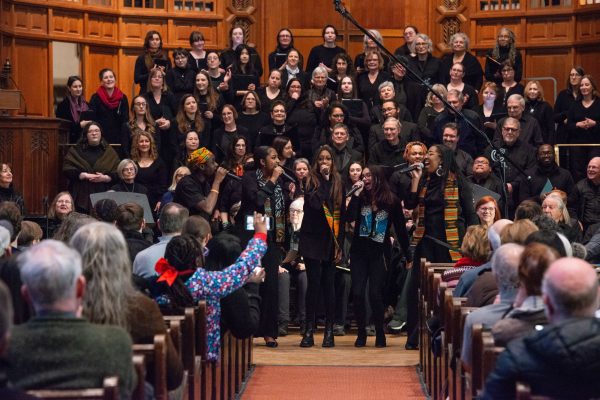
“There's a certain flair, a certain spirit that has been woven into the African American tradition,” Berryman says. “I don't know where I would be without that experience. I have no idea who I would be.” African American culture has a musical signature that demands further exploration and expression, he said; and by upholding this lens, human diversity is invited. “This music is for everybody.”
As one example of the projects and the “new experiences” that the fund could support, Berryman points to the 2025 New Haven Symphony Orchestra presentation of R. Nathaniel Dett’s “The Ordering of Moses.” It was a powerful experience, he said, for the chorus and orchestra to perform the New Haven debut of this historic piece from the African American choral music tradition. The Heritage Music Fund would certainly have contributed.”
Berryman also sees ample opportunity to partner with local contemporary musicians across genres, like jazz and R&B. “Where is the opportunity for traditional choral music and the music that has not yet merged with choral music – authentically enough anyway – to come together?” he asked.
“The fund can be used toward rebuilding choirs to sing African American music with authenticity,” he says.
“Music has a way of building bridges that rhetoric cannot,” adds Berryman. “It brings people together, oftentimes to have experiences that they might not be able to have in their own spaces. Whether for African Americans who are longing for those large choirs like they used to have, or for new audiences, this fund can support that.”


