
Sustainable CT Fellows Inspire Local Leaders
The Sustainable CT Fellowship program helps unite municipalities with local leaders and volunteers to tackle environmental initiatives, from climate change mitigation to civic health.
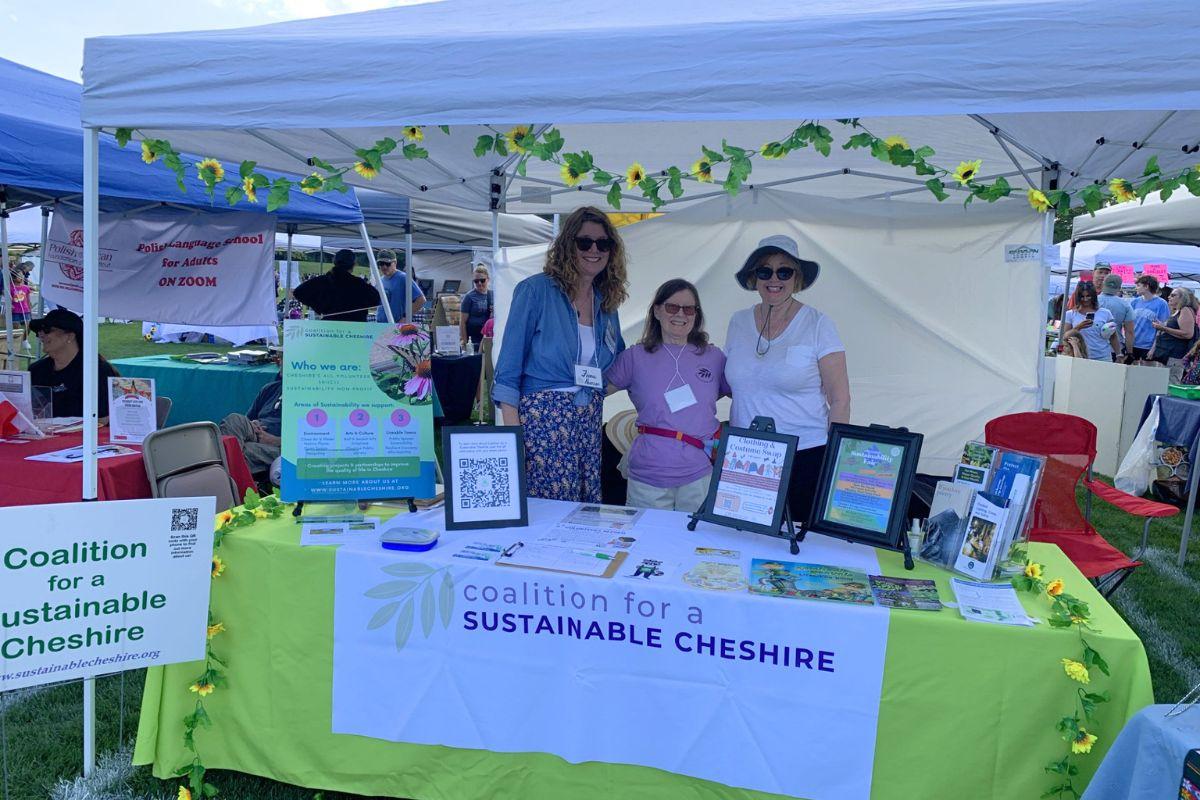
At this year’s Cheshire Fall Festival in September, residents and attendees received free yellow light bulbs for their yards or other outdoor needs. Over 300 bulbs were distributed.
The subtle changes in lighting are the result of a fundraising effort led by Coalition for a Sustainable Cheshire and Cheshire Creation Care with the support of Sustainable CT Fellow Grace DiTunno – and are significant for migrating birds and nearby insects, who can be thrown off course by artificial white lights.
Fundraisers like these, organized through Sustainable CT’s crowdfunding and grant matching program, the Community Match Fund, are a staple of the work Sustainable CT does to support environmental initiatives in the state.
“This year we hit $5 million invested back into communities through the Community Match Fund, which is extraordinary,” said DiTunno, a rising junior at the University of Connecticut and a 2026 Sustainable CT Fellow.

“We support all sorts of projects, from composting programs, to bike racks, to tree plantings, to community gardens, to events and more,” said Sustainable CT Executive Director Jessica LeClair. “To date, we have supported 88 projects in The Community Foundation’s region, with a total investment of $1,191,131.”
The organization and its annual cohort of Fellows work alongside local officials, leaders and volunteers to identify feasible and impactful sustainability actions. 141 of Connecticut’s 169 cities and towns are registered on Sustainable CT’s progress map.
Climate actions earn “points” that can accrue to “Bronze,” “Silver” or “Gold” status. Cheshire is one of 73 “certified” municipalities, having achieved Bronze status for the first time in 2021.
“I can honestly say that certification would not have been possible had we not had the support of the Sustainable CT Fellows,” said Fiona Pearson, Cheshire Town Council Member and Co-Chair of Coalition for a Sustainable Cheshire. “Grace was instrumental in really turning our attention to the Climate Leader designation, which is the goal that we’re now striving for.
The Climate Leader designation celebrates municipalities taking actions to offset and mitigate climate change, including reducing greenhouse gas emissions. This designation is an option for towns and cities that have already achieved Bronze or Silver status, and is a requirement to achieve Gold status. Cheshire expects to receive this designation by next summer.
This is how Sustainable CT has operated for ten years, and recently, through grant support from The Community Foundation for Greater New Haven: fellows are matched with regions where they attempt to initiate or continue a certification process.
The list of “certified” action items is wide-ranging, and not all actions are explicitly environmental. For example, sustainable workforce development, supporting arts and creative culture, and collecting and sharing data on homelessness can earn points.
“What's brilliant about Sustainable CT is the scaffolding it provides, and the idea generating,” said Pearson. “There are things you may not have thought about that would be appropriate and beneficial to the community that suddenly you can take action on because it's part of their scaffolding.”
As a political science major, DiTunno sees how grassroots efforts and local nonprofits, like Sustainable CT, are increasingly important.
“Right now our national political system may not necessarily be working for the environmental sector and sustainability. Federally we've lost tax credits for EVs. Social farm projects off the coast of Connecticut and Rhode Island were 90% complete and are now totally shut down. So focusing on national politics is not the way to go if you want to see change actually happen – that's when to look to grassroots organizations, nonprofits within your own community or within your state… to connect with real people in the community, work with people who are inspired or passionate about wanting to improve the well-being of their residents and really improve the future. And that's where we can come in and help people, or just assist people and inspire.”
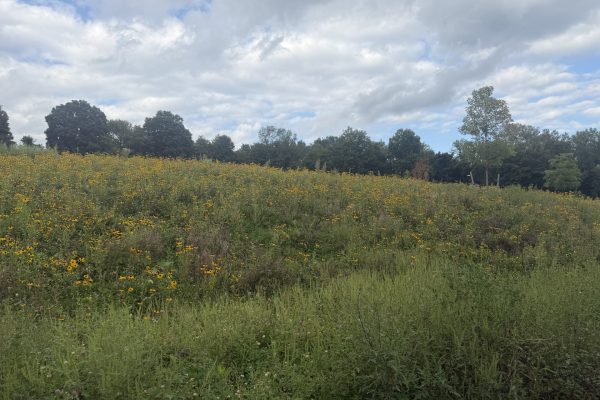
Projects that start small, like the light bulb giveaway, can seed something larger. Pearson said that if the yellow bulbs and public awareness spread, there may be opportunities for replacing white bulbs on municipal properties in town.
Pearson recalls how a pollinator garden had a similar domino effect, inspiring a series of native plant gardens across town. “Now we can more easily advocate for these sorts of things,” Pearson explained.
“I remember when I was younger, I wanted to be president,” said DiTunno. “But I realize now that the people within communities can do so much more. I feel like it's so fractured in the world right now, but community-building and actually going to these events, going and speaking, and really being a citizen, is so important.”
Photo caption: Native black-eyed Susans were planted outside Barnum Elementary School in Cheshire. (Provided photo.)
What inspires you?
Creating a charitable fund makes a difference now and forever.


