
Arts, Culture, Community and Social Justice at The Institute Library
At 200 years old, The Institute Library is a vibrant hub of arts and culture.
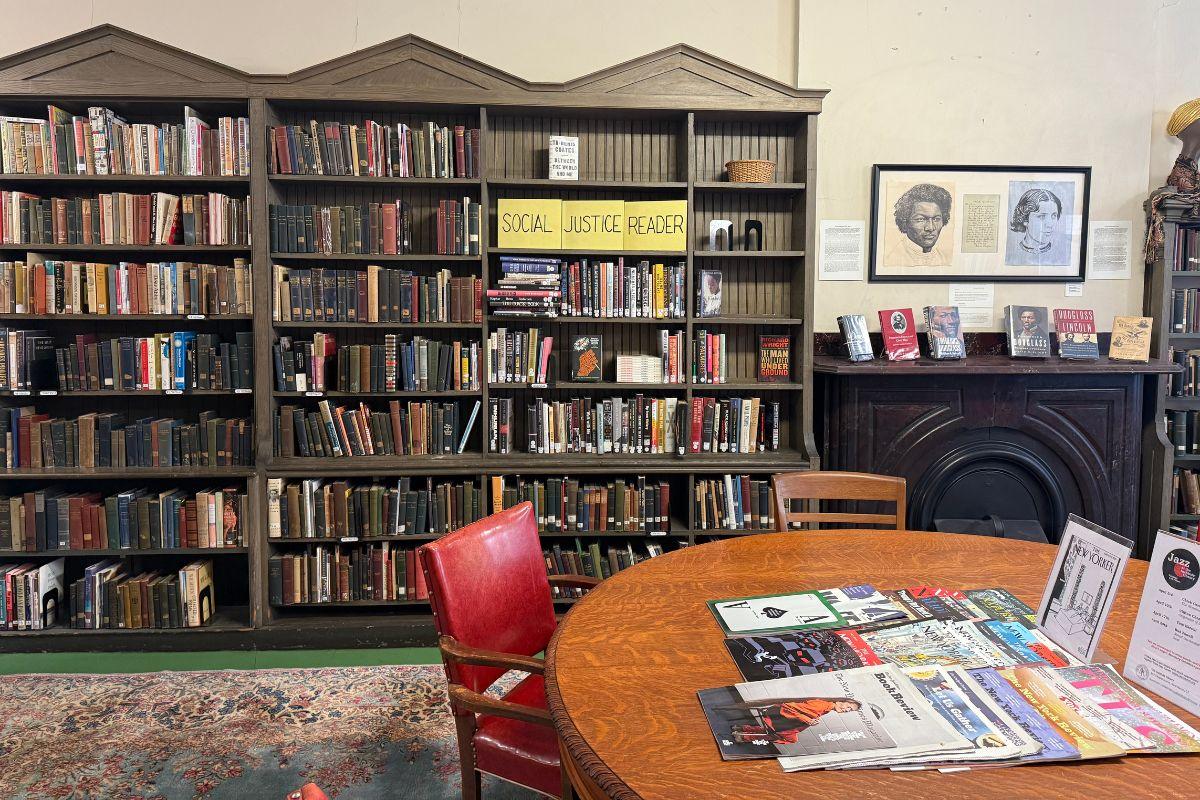
“I came up the stairs and I just went bananas, basically,” remembers The Institute Library’s operations manager Eva Geertz. It was her first time visiting the space in New Haven in 2002, a quiet sanctuary located just a stairwell away from bustling Chapel Street.
As a rare book collector, she was stunned. “There were all these things that I’d been looking for copies to read since I was a teenager – and they were just here.”
“It feels like you step back in time,” says executive director Andrew Drabkin. “But it’s not frozen in amber,” adds Geertz.
As one of the 19 remaining membership libraries in the United States, The Institute Library’s collections are a reflection of the library’s dues-paying members and their interests since its founding in 1826.
“These membership libraries, in a sense, acted as public libraries,” emphasizes Drabkin, “which didn't really exist until after the Civil War.” The Institute Library is considered Connecticut’s oldest independent circulating library.
Today, the library is a welcoming space for members and visitors alike, home to an art gallery and host to a colorful lineup of public events.
As the library marks its 200th anniversary this year, the same as the country’s semiquincentennial, themes of civic health and vitality – and the essential role “third spaces” play, as well arts and culture hubs – are top of mind for Geertz.
“I think people need it badly, and this place sort of feels like a living room,” she says. “It feels comfortable. It doesn't feel cold and institutional.”
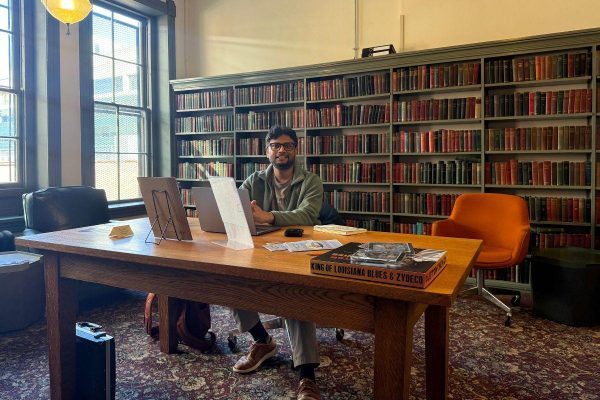
Aakash Kumar, a New Haven local, discovered the library just under a year ago, and has been coming to the space rather than working from home.
“When I first came here, they said you could just use this space. I've had Zoom meetings and people will literally use this as a virtual background,” he says, gesturing to the bookshelves behind him. Kumar will clarify to his colleagues, the stacks are real.
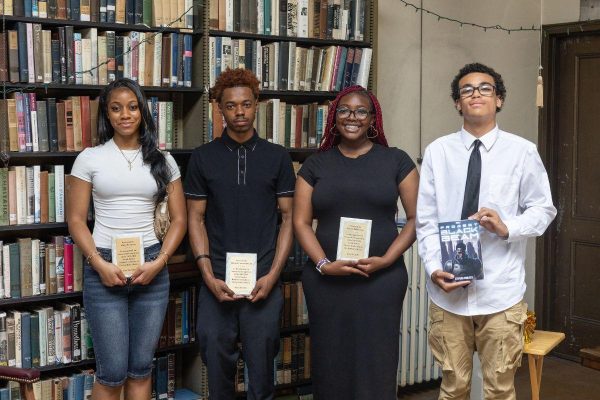
Recent grant funding from The Community Foundation has supported both general operations as well as the library’s Social Justice Reader (SJR) program, a fellowship opportunity for African American high schoolers in New Haven to explore race as a social construct, racial justice and racism from the disciplinary perspective of their choice. The program launched in 2020 during the height of and in response to the Black Lives Matter movement to provide meaningful opportunities for Black youth in New Haven.
Dr. Freda Grant, SJR program manager and a Black feminist critical theory scholar, asked this year’s fellows to read Project Black Beam, a work of speculative fiction by Stephen Fowlkes, and to consider constructing their future in light of the idea of Afrofuturism.
This, Dr. Grant says, is an idea that is also fundamentally about equity and care. “It is from that conversation about change, and how we can bring change, that we springboard back into their research to think about what you can do to address that issue, and to make a better future – really putting them in the driver’s seat.”
What inspires you?
Creating a charitable fund makes a difference now and forever.


